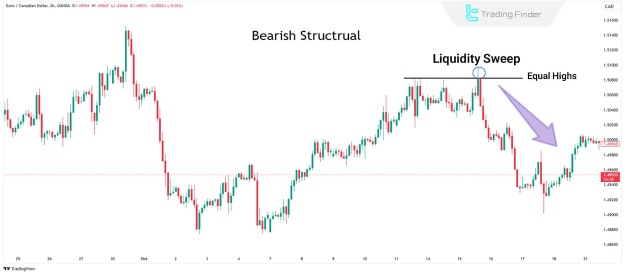


What is a Liquidity Sweep?
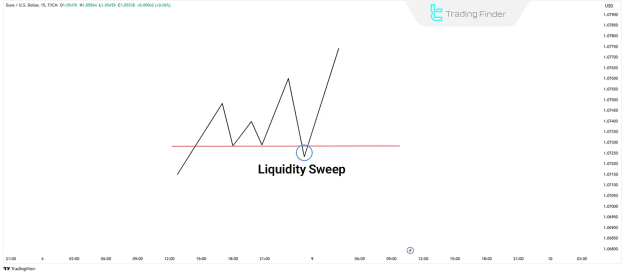
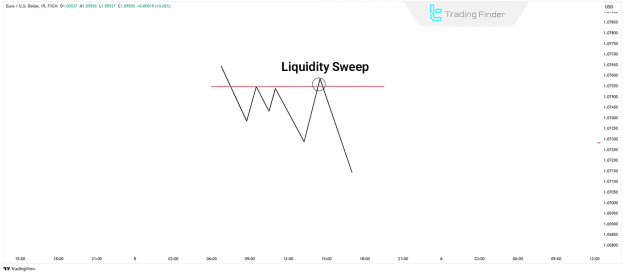
In ICT forex trading concepts, a liquidity sweep refers to a deliberate short-term price movement designed to trigger stop orders or attract pending liquidity near critical support or resistance levels. This typically happens just before a price reversal occurs.
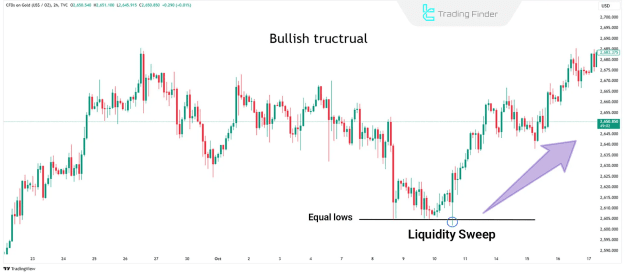
- In a bullish context, price dips below equal lows, sweeping sell-side liquidity before reversing upward.
- In a bearish scenario, price rises above equal highs, sweeping buy-side liquidity before reversing downward.
Key Characteristics of a Bullish Liquidity Sweep
- Price manipulation toward previous lows
- No sustained breakdown beyond those lows
- Strong upward reversal from the sweep point
Key Characteristics of a Bearish Liquidity Sweep
- Price manipulation toward previous highs
- No continued rally past those highs
- Immediate downward reversal from the sweep zone
How to Anticipate Liquidity Sweeps
To recognize and predict potential liquidity sweeps, traders must monitor the following:
- Identification of Equal Highs and Lows: These areas commonly hold stop orders that institutions target.
- Behavior Near Stop Zones: Sudden price moves into liquidity pools followed by reversals are signs of a sweep.
- Volume Spikes: An abrupt increase in trading volume near support or resistance levels suggests liquidity absorption.
- Candlestick Reversal Patterns: Pin bars and engulfing candles appearing around these zones can confirm sweep activity.
- Failure to Close Beyond Key Levels: When price briefly breaks a critical level but fails to close beyond it, a liquidity sweep is likely.
- Market Session Timing: Liquidity sweeps are more prevalent during high-liquidity sessions such as the London or New York open.
Buy Trades During Liquidity Sweeps
In a bullish market structure:
- Formation of equal lows invites sell-side stops
- A break below these lows followed by a swift upward reversal offers a buying opportunity
This setup is commonly visible on XAU/USD 2-hour charts during uptrends.
Sell Trades During Liquidity Sweeps
In a bearish market structure:
- Equal highs attract buy-side stops
- A breach above these highs, followed by a quick downturn, presents a shorting opportunity
This behavior is observable in EUR/USD 2-hour charts exhibiting downtrends.
What is a Liquidity Run?
A liquidity run occurs when price moves in alignment with the prevailing trend, targets key liquidity zones, and continues in the same direction. Unlike a sweep, a run signifies trend continuation after liquidity absorption.
- In a bullish run, price targets previous highs, captures buy-side liquidity, and establishes new highs (Break of Structure).
- In a bearish run, price moves toward previous lows, captures sell-side liquidity, and creates lower lows.
Buy Trades During Liquidity Runs
In bullish trends:
- Equal highs form above current price
- Price reaches these highs, absorbs liquidity, and continues higher
- Long trade opportunities arise after breakout confirmations
This pattern is typically seen in AUD/USD 1-hour charts.
Sell Trades During Liquidity Runs
In bearish trends:
- Equal lows form below current price
- Price reaches and breaks below these lows, capturing liquidity and extending the downtrend
- Short trade setups occur on continuation moves
These patterns are observable in XAG/USD 30-minute charts.
Differences Between Liquidity Sweep and Liquidity Run
Although both strategies target liquidity, their outcomes and usage differ:
- Liquidity Sweep: Attracts liquidity, then reverses direction. Used for counter-trend entries.
- Liquidity Run: Attracts liquidity, then continues in the trend direction. Used for trend-following trades.
Key indicators of each:
- Liquidity Sweep: Sharp, short-lived price movements near liquidity zones
- Liquidity Run: Steady price action in line with market direction post-liquidity absorption
Conclusion
Understanding and applying the principles of Liquidity Sweeps and Liquidity Runs in ICT and smart money concepts enhances one’s ability to interpret institutional market behavior.
Both strategies, when properly identified, can significantly improve trade timing, offering traders optimal entry and exit points in both reversal and continuation scenarios.
These concepts are invaluable for anyone pursuing advanced forex education and aiming to trade in alignment with market makers.