

Identifying Different Types of ICT Order Blocks
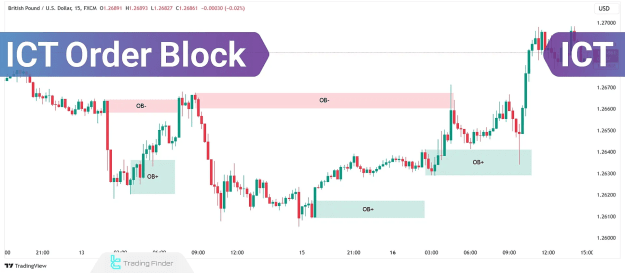
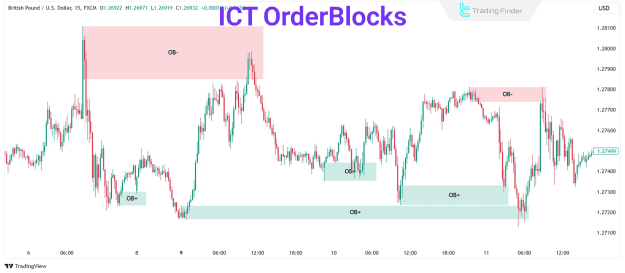
Order Blocks, or OBs, are essentially zones on a price chart that exhibit substantial buying or selling pressure, leading to an abrupt and strong market shift, either upward or downward. Understanding these key areas allows traders to anticipate potential price reversals or continuations.
Types of Order Blocks
Based on the direction of the market movement, order blocks are categorized into two primary types:
- Bullish Order Block (OB+): Associated with upward price movements.
- Bearish Order Block (OB-): Associated with downward price movements.
Bullish Order Block
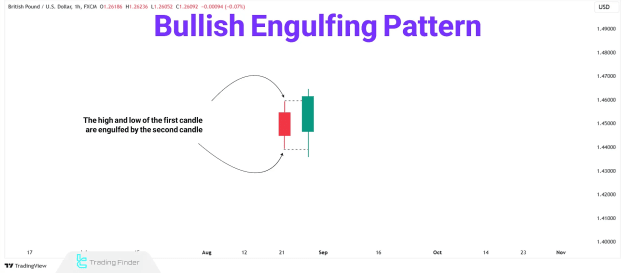
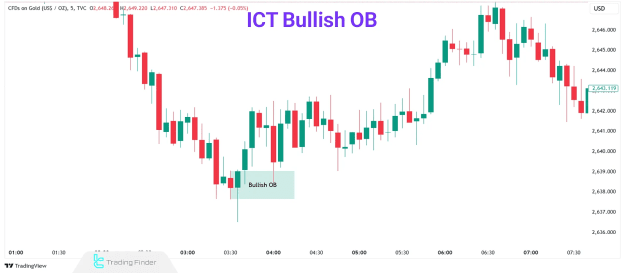
An ICT Bullish Order Block signifies an area on the price chart where robust buying pressure has culminated in a sudden and intense upward price surge. This type of order block is typically identified as the last bearish candle preceding a strong bullish move. It commonly involves two candles: an initial bearish candle followed by a powerful bullish engulfing candle. The bullish engulfing candle completely overrides the preceding bearish candle, from wick to wick and body to body, indicating a significant shift in market sentiment.
How to Identify a Valid Bullish Order Block?
To confirm a valid bullish order block, several criteria must be met:
- The second (bullish) candle must effectively "remove" the liquidity positioned below the previous bearish candle's low.
- The second (bullish) candle must close definitively above the high of the previous bearish candle.
- There must be a detectable imbalance (Fair Value Gap - FVG) present within the order block area on lower timeframes.
- A Market Structure Shift (MSS) should be evident in lower timeframes, indicating a change in the prevailing market direction.
Bearish Order Block
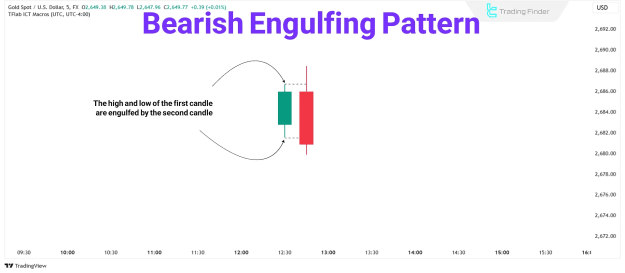
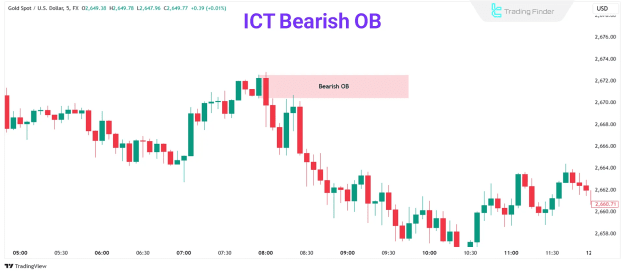
An ICT Bearish Order Block indicates an area on the price chart where substantial selling pressure has led to a sudden and intense downward price movement. This order block is typically identified as a bullish candle followed by a strong bearish engulfing candle. The bearish engulfing candle completely envelops the preceding bullish candle, signaling a decisive shift towards bearish sentiment.
How to Identify a Valid Bearish Order Block?
For a bearish order block to be considered valid, the following conditions should be observed:
- The second (bearish) candle must effectively "take out" the liquidity positioned above the previous bullish candle's high.
- The second (bearish) candle must close definitively below the low of the previous bullish candle.
- A detectable imbalance (Fair Value Gap - FVG) should be present within the order block area on lower timeframes.
- A Market Structure Shift (MSS) must be evident in lower timeframes, confirming a change in market direction.
Trading with ICT Order Blocks: Strategic Entry and Exit
Once identified, ICT Order Blocks provide a framework for executing high-probability trades by aligning with institutional flow.
How to Trade a Bullish ICT Order Block?
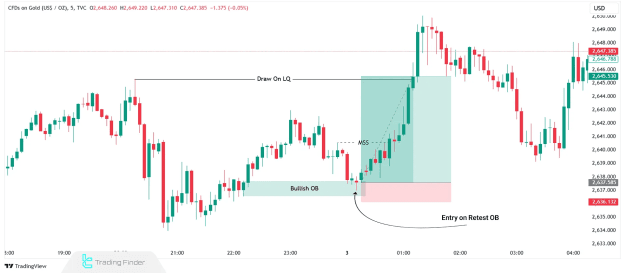
To successfully trade based on a Bullish ICT Order Block, follow these systematic steps:
- Identify the Market Order Flow: First, ascertain the predominant trend or market order flow. Bullish order blocks are most effective and reliable when the market is in an uptrend. In downtrends, they might only offer short-term reversals.
- Identify a Valid Bullish ICT Order Block: Locate key areas on the chart where strong bullish order block setups are present, meeting the identification criteria outlined above.
- Wait for Price Return to Order Block: After identification, patiently wait for the price to retrace and revisit the identified bullish order block zone.
- Entry at 50% Retracement: When the price approaches the bullish order block, consider initiating a buy trade around the 50% retracement level of the order block's range. This often provides an optimal risk-to-reward entry.
- Confirm with Lower Timeframes: Utilize lower timeframes (e.g., 15-minute or 5-minute charts) to seek additional confirmation signals, such as market structure shifts within the order block area, before entering a trade.
How to Trade a Bearish ICT Order Block?
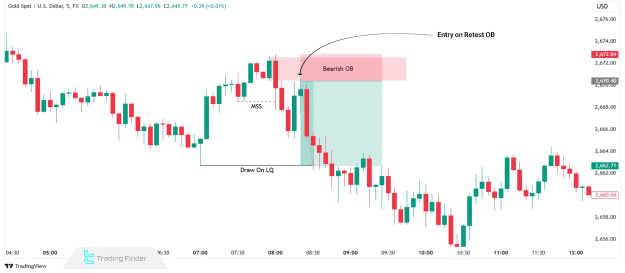
Trading based on a Bearish ICT Order Block involves a similar structured approach:
- Identify the Market Order Flow: Determine the prevailing market trend. Bearish order blocks are generally more reliable and effective when the market is in a downtrend. In uptrends, they might only present brief reversal opportunities.
- Identify a Valid Bearish ICT Order Block: Pinpoint critical areas on the chart exhibiting strong bearish order block setups that meet the specified identification criteria.
- Wait for Price Return to Order Block: Once identified, await the price's return and re-entry into the bearish order block zone.
- Entry at 50% Retracement: As the price approaches the bearish order block, consider initiating a sell trade around the 50% retracement level of the order block's range for an optimized entry.
- Confirm with Lower Timeframes: Use lower timeframes (e.g., 15-minute or 5-minute charts) to confirm the trade, looking for signals like market structure shifts within the order block area.
Stop Loss and Take Profit for Order Block Trades
Effective risk management is paramount when trading with order blocks:
- Stop Loss Placement: For bullish order blocks, place your stop loss a few pips below the order block's low. For bearish order blocks, place your stop loss a few pips above the order block's high. This placement limits potential losses if the trade does not go as anticipated.
- Take Profit Target: Aim to take profit at the next significant liquidity level or a point of interest where price is likely to react.
- Risk Management: Always adhere to strict risk management principles, risking no more than 1% of your trading capital on any single trade.
Final Notes on Order Blocks
Order blocks are not solely indicators of initial market shifts; they can also be observed following pullbacks within existing trends. These order blocks serve as powerful confirmations of the trend's underlying strength:
- In a downtrend, the formation of a bearish order block (OB-) after a bullish pullback reinforces the downtrend, presenting new selling opportunities.
- In an uptrend, the formation of a bullish order block (OB+) after a bearish pullback confirms the uptrend's robustness, offering new buying opportunities.