
-
US Treasury Auction Results


- Comments / Top
- Subscribe

-
- Older Stories
 From cruxinvestor.com|May 13, 2026
The Strait of Hormuz typically carries roughly one-fifth of seaborne petroleum trade, and Iran's confirmed control of the corridor, reiterated by Islamic Revolutionary Guard Corps ...
 From tippinsights.com|May 13, 2026
Concerns over depleted U.S. missile stockpiles are casting a shadow over President Donald Trump’s summit with Chinese President Xi Jinping in Beijing, with analysts warning the ...
 From bostonfed.org|May 13, 2026|3 comments
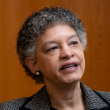
Good morning, and a warm welcome to all of you. It is a pleasure to welcome members of the Boston Economic Club to the Boston Fed today. We appreciate our relationship with the Economic Club, and its role in the vibrant economic and financial “ecosystem” of Greater Boston. 1 I’m looking forward to sharing some thoughts on economic conditions. But first, as always, my standard disclaimer. These comments reflect my own views, not necessarily those of my colleagues at the Board of Governors in Washington, D.C., or at the other Federal Reserve Banks. I’ll preface my remarks about the economy with a few opening observations. It has become a welcome tradition for the Club to invite Federal Reserve Bank staff to attend when Boston Fed presidents speak. And today, in addition to Club members, the audience includes many Bank employees. So, in the context of all the recent discussion about the Fed’s roles, independence from political pressures, and opportunities to be more effective and efficient, I’d like to say a few words about our people. At his final press conference, outgoing Fed Chair Jay Powell said that “This institution is resilient, capable, and staffed by professionals of extraordinary talent and exceptional dedication.” Earlier this year, he also said “I will tell [the next Chair that] you're about to meet the most qualified group of people you not only have ever worked with, [but] you will ever work with … There isn't a better cadre of professionals more dedicated to the public wellbeing than those who work at the Fed.” Having been at the Boston Fed for almost four years, and seeing it in action, I wholeheartedly agree with his sentiments. Many people do not reali FED'S COLLINS SAYS SHE COULD ENVISION THE NEED FOR RATE HIKES COLLINS BELIEVES THE FED WILL HAVE TO MAINTAIN STRICT POLICIES FOR A WHILE LONGER. FED'S COLLINS WANTS MORE RATE CUTS LATER THIS YEAR IF ECONOMY PERMITS. COLLINS STRESSES THE FED MUST TAKE NECESSARY ACTIONS TO LOWER INFLATION TO 2%.

-
- Newer Stories
 From @financialjuice|May 13, 2026|1 comment
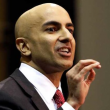
Fed's Kashkari: Inflation is too high. Fed's Kashkari: Need to get back to 2% inflation, should not move the goalpost. Fed's Kashkari: A huge question mark about how long the Hormuz Strait will be closed, which will have a big effect on inflation. Fed's Kashkari: even if Hormuz Strait reopens, it will be months before supply chains return to normal.
 From bankofcanada.ca|May 13, 2026
Governing Council began by discussing the impact of the war in the Middle East on the global economy and inflation. The conflict had led to a sharp increase in global oil prices and heightened volatility in global energy and financial markets. Growth prospects had deteriorated for many countries, particularly those that are heavily reliant on oil and natural gas imports. Higher energy prices had boosted inflation in countries around the world. In the United States, growth was expected to remain solid in the first quarter. Households continued to spend despite higher gasoline prices, and investment in artificial intelligence (AI) remained strong. Members noted that the US labour market had been relatively stable, with few layoffs but weak hiring. Inflation had held steady at just under 3% in the period before the war started and had moved up further with the increase in gasoline prices. In China, in the near-term the economy appeared relatively insulated from the war in the Middle East. Robust exports continued to support growth, offsetting modest domestic demand. The economy in the euro area had been showing signs of resilience before the start of the war. But higher oil and natural gas prices and the potential for energy shortages were likely to weigh on growth. The global benchmark price of oil was volatile and above US$100 per barrel at the time of the April Monetary Policy Report. Consistent with the oil futures curve, members’ baseline assumption was that oil prices would decline in the coming quarters. They noted, however, that there was considerable uncertainty around this assumption due to the unpredictable path of the war. Several other commodity prices had risen in recent months, i AHEAD OF THE BANK OF CANADA'S APRIL 29 RATE DECISION, GOVERNING COUNCIL MEMBERS CONCURRED THEY HAD ROOM TO REMAIN PATIENT FOR THE TIME BEING – MINUTES; GOVERNORS BELIEVED THE SITUATION COULD SHIFT RAPIDLY AND RATES MAY NEED TO RISE TO PROTECT AGAINST ENDURING INFLATION – MINUTES GOVERNORS BELIEVED THEY COULD OVERLOOK THE INITIAL INFLATION JOLT FROM HIGHER OIL PRICES – MINUTES; GOVERNORS ALSO RECOGNIZED THERE MIGHT BE LESS SURPLUS SUPPLY THAN ESTIMATED, AND THE OUTPUT GAP COULD NARROW QUICKER THAN PROJECTED – MINUTES
 From finance.yahoo.com|May 13, 2026|1 comment
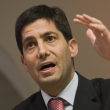
The U.S. Senate is expected to confirm Kevin Warsh as chair of the Federal Reserve on Wednesday, putting the 56-year-old lawyer and financier at the helm as the U.S. central bank ...
- Story Stats
- May 13, 2026 12:02pm Posted by
 Low Impact
Breaking
11,524
Low Impact
Breaking
11,524 - Linked events:

- From bls.gov|May 13, 2026|93 comments