
-
Revolutionary find: Hoard of century old gold coins discovered under a house in western Russia

A hoard of 409 gold ruble coins dated to over a century ago was discovered underneath a home in Torzhok, Russia, the Institute of Archaeology of the Russian Academy of Sciences shared in early March. Discovered during a joint expedition between the Institute and the All-Russian Historical and Ethnographic Museum in 2025, the hoard is one of the largest hoards of late Imperial Russian gold coins ever to be recovered. Part of the property under excavation contained the foundations of a house believed to have been destroyed during World War II. After the war, the home’s new owners rebuilt the wooden house on the ... (full story)
- Comments / Top
- Subscribe
-
- Older Stories
 From federalreserve.gov|Mar 26, 2026|1 comment
Thank you, Francisco, for the kind introduction. It is an honor to be here at the Economic Club of Miami. Tonight I will talk about a topic too large to ignore: the Federal Reserve's balance sheet. Like any other bank, the Fed's balance sheet is a record of the assets and liabilities we hold. The assets are primarily Treasury securities and agency mortgage-backed securities (MBS). The liabilities include all U.S. currency in circulation, reserve balances banks hold at the Fed, and the Treasury General Account. The size and composition of these holdings matter because they affect the amount of money in the banking system and influence broader financial conditions. Understanding how the balance sheet functions is essential to understanding how the Fed supports economic stability and conducts monetary policy. Tonight I will discuss the various regimes under which the Fed has operated its balance sheet and explain why, in my view, shrinking the size of the balance sheet is desirable. Next, I will explain why the challenge of shrinking the balance sheet is a solvable one, and then I will discuss potential paths forward toward accomplishing that goal. Finally, I will conclude with the monetary policy implications of such action. FED GOV MIRAN/ECON CLUB MIAMI: AS HARD AS IT IS, IT'S POSSIBLE TO SHRINK THE FED'S BALANCE SHEET WITHOUT RETURNING TO AN ERA A SCARCE RESERVES #Miran #FederalReserve #economy
 From jckonline.com|Mar 26, 2026
The price of gold has started to stabilize after fluctuating wildly during the first three months of 2026 and is likely to resume its climb, according to metals experts. Following ...
 From @DeItaone|Mar 26, 2026|27 comments
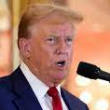
TRUMP ON PAUSE ON IRAN ENERGY STRIKES: IRANIANS ASKED ME TO DO THAT

-
- Newer Stories
 From federalreserve.gov|Mar 26, 2026
Thank you, Donald, for the kind introduction. I am honored to be here in Dallas. I very much enjoyed my time today meeting with community members and hearing from the hardworking staff at the Dallas Fed. And I appreciate this opportunity to speak with all of you this evening. Tonight, I would like to share with you my updated economic outlook and then discuss the possible implications of that outlook for the path of monetary policy. It is an opportune time for that discussion, just a week after our last Federal Open Market Committee meeting. Then, I will expand on the implications of elevated energy prices for the economy, particularly thinking about the effects here in the resource-rich 11th District, and finally I will be happy to answer some questions. I see the U.S. economy continuing to grow, led by resilient consumers and healthy business investment. The labor market is roughly in balance but susceptible to adverse shocks. Unemployment is low and stable by historical standards, while hiring has slowed to a very modest pace. Inflation, meanwhile, remains above the Federal Reserve's 2 percent target. At the beginning of the year, I noted signs that inflation would return to a sustainable path toward our objective.2 The ongoing uncertainty over tariff policy and the recent jump in energy prices, however, complicates, at least in the short term, the picture on both sides of our dual mandate of maximum employment and price stability. Just in | Jefferson warns that tariff policy uncertainty and rising energy prices are complicating the short-term outlook for employment and inflation. Fed's Jefferson notes US labor market is balanced but vulnerable to adverse shocks FED GOV JEFFERSON/GLOBAL PERSPECTIVES: 'LITTLE PROGRESS' IN SLOWING INFLATION OVERPAST YEAR AND STILL 'AN UPSIDE RISK;' YET MONPOL 'WELL POSITIONED' #Jefferson #FederalReserve #economy
 From federalreserve.gov|Mar 26, 2026
Thank you to Brookings for the invitation to speak to you this evening. Before we sit down, I thought I might offer some context for our conversation by outlining my views on the outlook for the U.S. economy and the implications for monetary policy. I will also touch briefly on regulatory matters. As you know, the Federal Open Market Committee (FOMC) met last week and chose to maintain the current setting of monetary policy—a decision I supported. The U.S. economy has thus far remained resilient, despite having experienced a series of shocks over the past year. But these shocks have complicated the Committee's efforts to return inflation to our 2 percent goal while also supporting maximum employment. The backdrop for these developments has been an economy that has continued to grow at a solid pace, supported by resilient consumer spending, substantial productivity growth over the past several years, and exceptionally strong business investment in artificial intelligence (AI) and data centers. Higher productivity growth in the wake of the COVID-19 pandemic has likely been driven by technological enhancements and business process improvements that economize on labor as well as by strong new business formation, which both directly and through competition enhances productivity. In my view, investments in AI are likely in the future to contribute to strong productivity growth as these technologies are integrated into business processes and become more widespread. While in the long run AI is likely to contribute to a stronger economy, this may occur following some significant labor market disruptions.2 Let me turn now to the shocks to the U.S. economy that I mentioned. The latest of these developments has been the current conflict in the Middle East, which has affected both oil production and transportation in much of the region, driving up energy prices and affecting other commodities as well. If the conflict were to end soon, it is possible its effects on inflation and economic activity could be limited. But if it continues for some time, the spike in energy prices and other commodities could have broader implications for both prices and economic activity. We have had five years now of inflation at elevated levels, and near-term inflation expectations have risen again, so I am particularly concerned that yet another price shock could increase longer-term inflation expectations. Consumers and businesses factor future inflation into their current economic decisions, so there is a risk that this dynamic could lead to inflation persistence, making it more difficult to return inflation to 2 percent. We need to be especially vigilant. Uncertainty about how these developments will unfold is just one of the reasons why I thought it necessary to hold policy steady at least week's FOMC meeting. A key factor we have been contending with over the past 12 months is the impact of tariffs on inflation. Tariffs have driven up goods prices. Elevated goods inflation has contributed significantly to a stalling in the disinflationary process. While the effective tariff rate had been fluctuating at a high but variable level for around a year now, the recent Supreme Court ruling has led to a reduced rate of around 10 percent—a still-high level. And additional measures could move tariffs higher again. These fluctuations add to uncertainty about the ultimate effects of tariffs on inflation. A reasonable base case is that tariff effects on inflation will wane later this year, but there is some risk that tariff effects will take longer to dissipate. A third force affecting the economy has been the significant slowdown in the growth of the labo FED'S BARR: ECONOMY HAS STAYED RESILIENT THROUGH A SERIES OF SHOCKS, BUT THESE HAVE COMPLICATED FED REACHING ITS 2% INFLATION TARGET Fed Governor Michael Barr stated that a price shock from higher oil prices could trigger rising inflation expectations that the U.S. Federal Reserve needs to guard against. More Here ? pic.twitter.com/aPPpkOdDNj
 From channelnewsasia.com|Mar 26, 2026
Gold has long enjoyed a reputation as a financial “safe haven” during stormy times. But over the past few months of geopolitical chaos and market panic, the precious metal has ...
- Story Stats
- Mar 26, 2026 5:45pm Posted byEntertainment192
- Instruments:
