
-
Here’s What Analysts Say Might Happen to Gold Prices in 2026

The price of gold has started to stabilize after fluctuating wildly during the first three months of 2026 and is likely to resume its climb, according to metals experts. Following 2025’s record-breaking 65% return for gold, optimistic predictions of the metal’s price hitting $6,000 have quieted since the U.S. went to war with Iran. On Monday, the spot price of gold dropped to $4,278, its lowest price of the year. It had reached an all-time high of $5,594.82 on Jan. 29. But such swings have occurred in the past, and David N. Meger, the Chicago-based director of metals trading for High Ridge Futures, says he feels ... (full story)
- Comments / Top
- Subscribe
-
- Older Stories
 From @DeItaone|Mar 26, 2026|27 comments
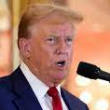
TRUMP ON PAUSE ON IRAN ENERGY STRIKES: IRANIANS ASKED ME TO DO THAT
 From trefis.com|Mar 26, 2026
In March 2026, the geopolitical script for a massive gold rally was written perfectly. Tensions in the Middle East reached a breaking point, with military strikes involving the ...
 From @financialjuice|Mar 26, 2026|2 comments
Fed's Cook: Labour market is in a low-hire, low-fire regime, and it's tough for the youngest workers.

-
- Newer Stories
 From federalreserve.gov|Mar 26, 2026|1 comment
Thank you, Francisco, for the kind introduction. It is an honor to be here at the Economic Club of Miami. Tonight I will talk about a topic too large to ignore: the Federal Reserve's balance sheet. Like any other bank, the Fed's balance sheet is a record of the assets and liabilities we hold. The assets are primarily Treasury securities and agency mortgage-backed securities (MBS). The liabilities include all U.S. currency in circulation, reserve balances banks hold at the Fed, and the Treasury General Account. The size and composition of these holdings matter because they affect the amount of money in the banking system and influence broader financial conditions. Understanding how the balance sheet functions is essential to understanding how the Fed supports economic stability and conducts monetary policy. Tonight I will discuss the various regimes under which the Fed has operated its balance sheet and explain why, in my view, shrinking the size of the balance sheet is desirable. Next, I will explain why the challenge of shrinking the balance sheet is a solvable one, and then I will discuss potential paths forward toward accomplishing that goal. Finally, I will conclude with the monetary policy implications of such action. FED GOV MIRAN/ECON CLUB MIAMI: AS HARD AS IT IS, IT'S POSSIBLE TO SHRINK THE FED'S BALANCE SHEET WITHOUT RETURNING TO AN ERA A SCARCE RESERVES #Miran #FederalReserve #economy
 From jpost.com|Mar 26, 2026
A hoard of 409 gold ruble coins dated to over a century ago was discovered underneath a home in Torzhok, Russia, the Institute of Archaeology of the Russian Academy of Sciences ...
 From federalreserve.gov|Mar 26, 2026
Thank you, Donald, for the kind introduction. I am honored to be here in Dallas. I very much enjoyed my time today meeting with community members and hearing from the hardworking staff at the Dallas Fed. And I appreciate this opportunity to speak with all of you this evening. Tonight, I would like to share with you my updated economic outlook and then discuss the possible implications of that outlook for the path of monetary policy. It is an opportune time for that discussion, just a week after our last Federal Open Market Committee meeting. Then, I will expand on the implications of elevated energy prices for the economy, particularly thinking about the effects here in the resource-rich 11th District, and finally I will be happy to answer some questions. I see the U.S. economy continuing to grow, led by resilient consumers and healthy business investment. The labor market is roughly in balance but susceptible to adverse shocks. Unemployment is low and stable by historical standards, while hiring has slowed to a very modest pace. Inflation, meanwhile, remains above the Federal Reserve's 2 percent target. At the beginning of the year, I noted signs that inflation would return to a sustainable path toward our objective.2 The ongoing uncertainty over tariff policy and the recent jump in energy prices, however, complicates, at least in the short term, the picture on both sides of our dual mandate of maximum employment and price stability. Just in | Jefferson warns that tariff policy uncertainty and rising energy prices are complicating the short-term outlook for employment and inflation. Fed's Jefferson notes US labor market is balanced but vulnerable to adverse shocks FED GOV JEFFERSON/GLOBAL PERSPECTIVES: 'LITTLE PROGRESS' IN SLOWING INFLATION OVERPAST YEAR AND STILL 'AN UPSIDE RISK;' YET MONPOL 'WELL POSITIONED' #Jefferson #FederalReserve #economy
- Story Stats
- Mar 26, 2026 4:59pm Posted byFundamental Analysis207
- Instrument:
