

Prop Firm DrawDown Protector : Prop Firm Capital Protection Expert MT4 |Forex Money Management: Forex Trade Management Expert MT4 |ICT Concepts Indicator MT4 | Smart Money Concepts Expert MT4| Get a free Expert Advisor license via Telegram and WhatsApp
How Forex Brokers Function
Forex brokers operate by sourcing real-time prices from liquidity providers or interbank systems and displaying them on trading platforms for client use.
Order Execution Approaches
Forex brokers utilise two primary methods to execute orders:
- Direct Market Access (STP or ECN): Orders are routed to liquidity providers or market networks without broker intervention.
- Market Maker Model: The broker acts as the counterparty to the client’s trade.
Broker Revenue Streams
Forex brokers earn income through:
- Spreads between bid and ask prices
- Commissions charged per trade
- Swap or overnight fees on leveraged positions
Additionally, they offer services such as different account types, trading tools, and risk management features.
Types of Forex Brokers
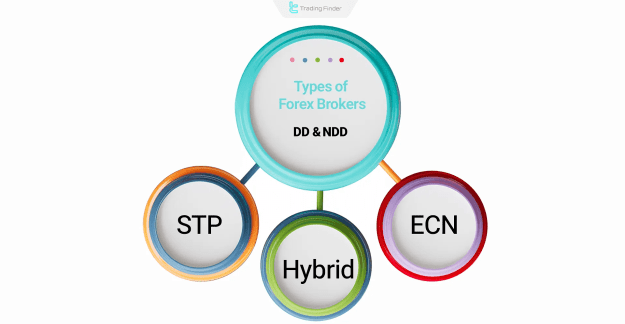
The operational model of each broker determines how client orders are handled. The main types include:
- Market Maker (Dealing Desk) Brokers
- No Dealing Desk Brokers: STP and ECN
- Hybrid Brokers
Market Maker Brokers
Market Maker brokers act as counterparties to client trades. Their key features include:
- Executing orders internally without routing to interbank markets
- Aggregating prices from multiple sources and offering fixed or variable spreads
- Generating revenue from spreads or client losses
While this model allows fast execution, it creates potential conflicts of interest as broker profits often align with client losses.
No Dealing Desk (NDD) Brokers
NDD brokers act as intermediaries, routing client orders directly to the market or liquidity providers without taking the opposite side of trades.
STP (Straight Through Processing) Brokers
- Orders are sent to liquidity providers such as banks and financial institutions
- Brokers earn via spreads or fixed commissions
- Automated execution reduces slippage and delays
ECN (Electronic Communication Network) Brokers
- Connect traders directly to a network of banks, institutions, and other market participants
- Provide tight or near-zero spreads with a commission per trade
- Ensure transparency, competitive pricing, and access to market depth
Both STP and ECN models are suitable for professional traders requiring direct market access without broker conflicts.
Hybrid Brokers
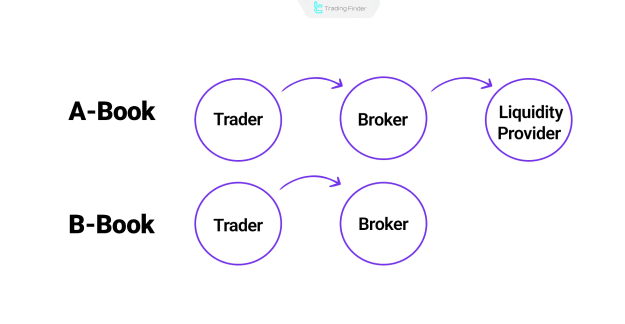
Hybrid brokers combine Market Maker and STP/ECN models. Some orders are processed internally (B-Book) while others are routed externally to liquidity providers (A-Book), optimising risk management and execution strategies.
A-Book, B-Book, and C-Book Broker Models
A-Book Brokers
- Orders are passed directly to liquidity providers or the interbank market
- The broker acts only as an intermediary, earning independently of trader profits or losses
B-Book Brokers
- Orders are executed internally with the broker as the counterparty
- Broker profits arise when traders lose, introducing a conflict of interest
- When managed effectively, this model can yield high broker profitability
C-Book Brokers
- Not officially recognised by major regulators
- Refers to internal management of specific client groups without market exposure
- Regulatory bodies such as the FCA and ASIC do not formally acknowledge this structure
Order Execution Methods in Forex Brokers
The execution method used by forex brokers influences trade speed, slippage, and rejection risks.
- Market Maker (Dealing Desk): Orders are executed internally, with prices set by the broker, potentially causing conflicts of interest
- No Dealing Desk (STP/ECN): Orders are routed directly to liquidity providers or market networks, ensuring transparency and market-based pricing
Role of Liquidity Providers
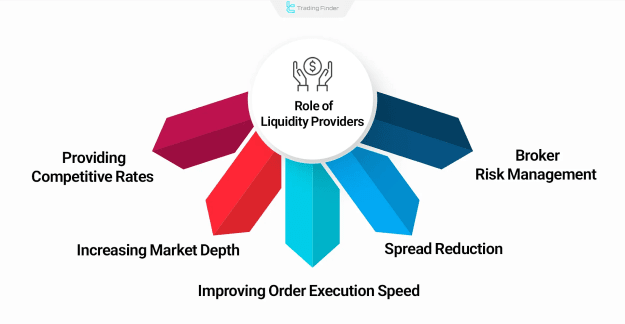
Liquidity providers are institutions offering bid and ask quotes, enabling brokers to deliver:
- Competitive market prices
- Enhanced market depth
- Faster execution speeds
- Reduced spreads
- Improved broker risk management
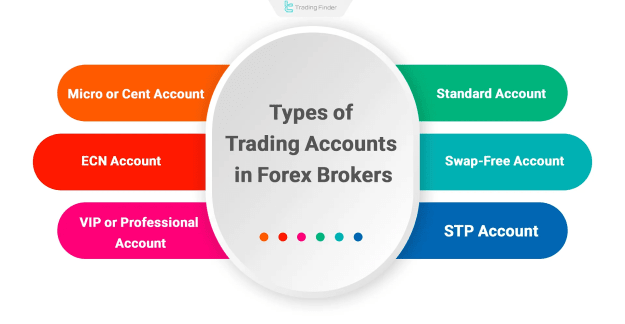
Types of Trading Accounts
Forex brokers offer varied account types to meet trader preferences:
- Standard Accounts: Fixed or variable spreads for general trading
- ECN Accounts: Direct market access with tight spreads and trade commissions
- STP Accounts: Direct routing to liquidity providers, often with variable spreads
- Micro or Cent Accounts: Smaller lot sizes for beginners or capital management
- Islamic (Swap-Free) Accounts: Compliant with Islamic finance principles, without interest
- VIP or Professional Accounts: Premium services with reduced spreads and commissions for high-volume traders
Forex Broker Regulation
Licensing by recognised regulatory authorities ensures broker credibility, fund safety, and compliance with legal standards.
Key Regulatory Bodies
- FCA (UK): Enforces strict capital and operational standards
- ASIC (Australia): Regulates transparency and leverage limits
- CySEC (Cyprus): Ensures trader protection within the EU
- NFA & CFTC (USA): Implements comprehensive compliance frameworks
- BaFin (Germany): Upholds robust financial regulations
- FINMA (Switzerland): Maintains strict market supervision
- FSCA (South Africa): Oversees brokers within emerging markets
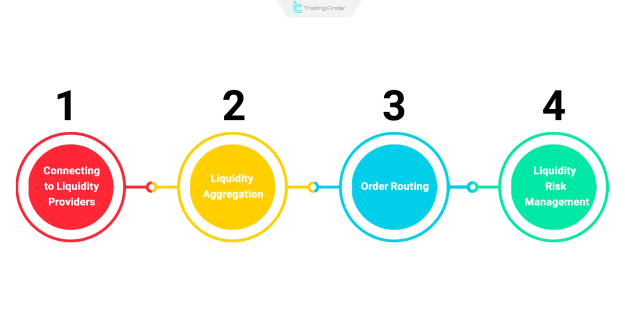
Liquidity Management Strategies
To provide efficient order execution, brokers:
- Connect to multiple liquidity providers for optimal pricing
- Aggregate quotes from various sources to ensure competitive spreads
- Route orders based on volume, speed, and internal policies
- Manage risks through volume caps, spread adjustments, or liquidity provider switches during high volatility
Technologies Used by Modern Forex Brokers
Advanced technology enhances broker operations and trader performance:
- ECN connectivity for direct market access
- Liquidity aggregation systems for competitive pricing
- VPS services for uninterrupted, high-speed execution
- FIX API integration for algorithmic and institutional trading
- AI and machine learning for analysis and pattern recognition
- Modern platforms like MetaTrader 5 and cTrader
- Cybersecurity systems including SSL encryption and intrusion detection
Conclusion
Forex brokers operate as intermediaries in global currency markets using Market Maker, STP, and ECN models. Key aspects to evaluate when selecting a broker include:
- A-Book vs. B-Book operational structures
- Broker regulatory compliance
- Offered account types and trading conditions
- Role and integration of liquidity providers
Modern brokers combine technology and strict regulation to create a transparent, secure, and efficient trading environment for global traders.