

TP & SL Tool: Risk Reward Ratio Calculator RRR MT5 | Prop Firm Protector: Trade Assist Prop Firm Plus TF Expert MT5 | Money Management + DrawDown Protector: Trade Panel Prop Firm Drawdawn Limiter Pro MT5 |Get a free Expert Advisor license via Telegram and WhatsApp
What Is the Friday Seek and Destroy Strategy?
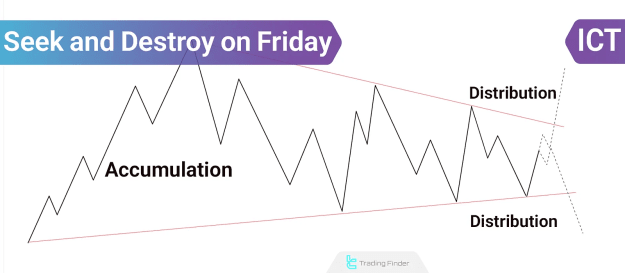
From Monday to Thursday, the market often exhibits a range-bound, deceptive price action. This period of consolidation is crucial as it allows institutional traders to build positions while luring retail traders into premature or false entries. This creates pools of liquidity (stop-losses and pending orders) around the swing highs and lows of the range.
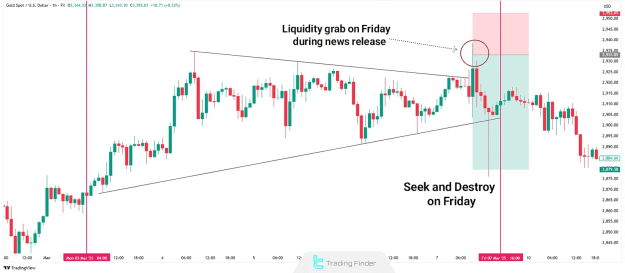
On Friday, coinciding with a high-impact news event like NFP or FOMC, the market executes a two-part move:
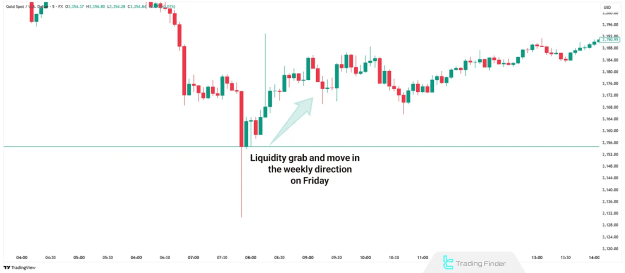
- A quick liquidity sweep in the counter-trend direction to trigger the accumulated stop-losses.
- A sharp displacement in the direction of the underlying weekly order flow, targeting higher timeframe liquidity levels.
This model emphasizes that entering trades during the pre-news consolidation phase is a high-risk endeavor. The optimal approach is to wait for the liquidity sweep to conclude and then seek confirmation on lower timeframes for a low-risk entry.
Market Structure Analysis in Friday Seek and Destroy Setups
Recognizing the market structure is paramount to successfully trading the Seek and Destroy profile.
Bullish Seek and Destroy Market Behavior
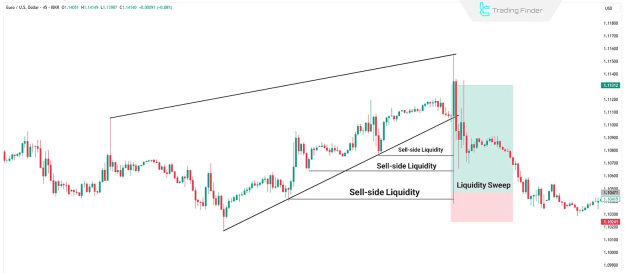
In a bullish market, the objective is to accumulate sell-side liquidity. From Monday to Thursday, price action may appear erratic, forming higher highs and lower lows without a clear trend. This behavior is designed to trap sellers and create a large cluster of sell-side liquidity below key support levels.
On Friday, the news release triggers the sell-side liquidity sweep, stopping out traders with stop-losses below support zones. This is followed by a bullish displacement that aligns with the weekly order flow and aims for a higher timeframe "draw on liquidity."
Bearish Seek and Destroy Market Behavior
Conversely, in a bearish market, the strategy is to absorb buy-side liquidity. The price action from Monday to Thursday is similarly erratic, creating lower lows and higher highs to mislead buyers into premature long positions above resistance.
Following the news on Friday, the market performs a buy-side liquidity sweep, triggering stops above resistance levels. A sharp bearish displacement then ensues, pushing the price lower in line with the dominant weekly flow to target a higher timeframe liquidity objective.
Common Trading Mistakes in the Friday Seek and Destroy Profile
Traders often fail to navigate Seek and Destroy weeks due to several key errors:
- Entering During Consolidation: A major mistake is trading the pre-news consolidation phase. Retail traders often attempt to scalp these ranges or take entries based on traditional support and resistance, only to be stopped out by the subsequent liquidity sweep.
- Lack of Confirmation: The Seek and Destroy profile requires patience. Entering a trade without confirmation signals, such as a Market Structure Shift (MSS) or Change in State of Delivery (CISD), after the liquidity sweep is a high-risk move.
- Ignoring Higher-Timeframe Targets: Failing to identify the Draw on Liquidity—the ultimate higher-timeframe target—can lead to misreading the post-sweep trend direction and taking counter-trend trades.
Conclusion
The Friday Seek and Destroy setup is a sophisticated strategy that highlights how smart money manipulates price to trap retail liquidity. Success in this environment depends on understanding the underlying mechanics of liquidity and exercising patience, waiting for confirmation after the decisive move has occurred. A comprehensive analysis of market structure, including the identification of MSS, CISD, and Draw on Liquidity, is essential for informed decision-making.