

TP & SL Tool: Risk Reward Ratio Calculator RRR MT5 | Prop Firm Protector: Trade Assist Prop Firm Plus TF Expert MT5 | Money Management + DrawDown Protector: Trade Panel Prop Firm Drawdawn Limiter Pro MT5 |Get a free Expert Advisor license via Telegram and WhatsApp
Why Is the New York Session Important?
New York is globally recognized as one of the largest financial centers, serving as a primary hub for the Forex Market. The significant volume of transactions and the profound impact of U.S. economic news during this period underscore its critical role in forex trading.
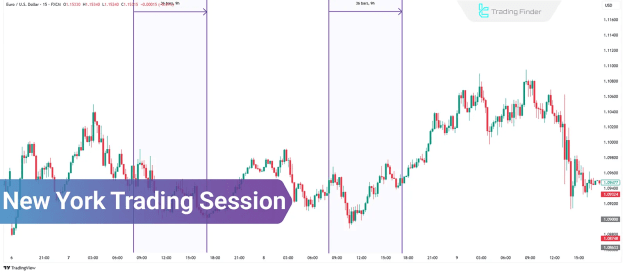
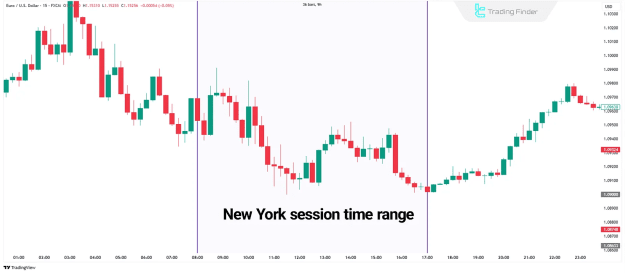
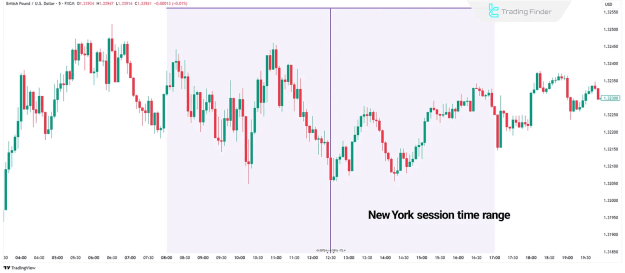
Operating from 8:00 AM to 5:00 PM (New York local time), the New York session exhibits several key characteristics:
- Early Overlap with London Session: This overlap significantly boosts liquidity and leads to reduced trading costs, often manifesting as tighter spreads.
- Market Activity Decline: Activity typically subsides during the later hours of the session.
- Impact of U.S. Economic Reports: Numerous influential U.S. economic reports are released early in the session, often triggering strong market reactions.
- Reduced Afternoon Liquidity: As European markets close, liquidity tends to diminish in the afternoon.
- Lower Friday Activity: Fridays often see reduced activity, as many traders close their positions in the latter half of the day, frequently leading to trend reversals.
Three Phases of the New York Trading Session
The New York session can be distinctly divided into three primary phases:
- Morning (8:00 AM – 12:00 PM): This phase experiences maximum volatility and trading volume, primarily due to the active overlap with the London session.
- Noon (12:00 PM – 1:00 PM): During this hour, liquidity generally dips, and the market transitions into a quieter period.
- Afternoon (1:00 PM – 4:00 PM): As the NYSE concludes trading at 4:00 PM, many traders close their positions, resulting in a noticeable drop in market activity.
What Makes the New York Session Unique?
The New York session possesses distinct characteristics that set it apart:
- High Morning Liquidity: This is a direct result of the overlap with the London session.
- Significant Impact of Economic News: Most major U.S. economic reports are released at the session's outset, causing notable market shifts.
- Reduced Afternoon Liquidity: This follows the closure of European markets.
- Lower Activity on Fridays: Many traders close positions, which can potentially lead to reversals in market trends.
Who Should Trade the New York Session?
This session is particularly well-suited for traders who:
- Seek frequent trading opportunities.
- Prioritize high liquidity.
- Are comfortable with significant market volatility.
- Engage in news-based trading.
Which Currency Pairs to Trade During the New York Session?
While a wide range of currency pairs are tradable, certain pairs offer superior conditions due to higher market liquidity and tighter spreads. The following are recommended for trading during the New York session:
- Major Pairs (Majors): EUR/USD, GBP/USD, USD/JPY, and USD/CHF are renowned for their highest trading volume and tightest spreads.
- USD-Related Pairs: These pairs are particularly responsive to the release of U.S. economic data, often exhibiting sharp reactions.
- Cross Pairs: EUR/JPY and GBP/JPY are attractive options due to their elevated volatility during this session.
Conclusion
The New York trading session is undeniably one of the most influential and volatile periods in the forex market. Its overlap with the London session is crucial in dictating the daily market direction. Traders can effectively capitalize on the high volatility by concentrating on major currency pairs, USD-based pairs, and inherently volatile cross pairs.