
-
Rates Spark: The impact is no longer transitory

As a consequence of the war to date, we are getting a feed of higher nominal yields, higher real yields and higher inflation breakevens. The 2yr breakeven inflation expectation is now at 3.2%. That’s a market average in the coming two years. At the same time, longer tenor real yields are mostly higher since the war broke, which is in fact a sign of resilience. The profile ahead is prone to feature higher longer tenor market rates, with the 10yr nominal yield getting to the 4.25% to 4.5% range (now 4.2%), on elevated inflation expectations. If, as we expect, the war is in a material wind down phase from April ... (full story)
- Comments / Top
- Subscribe
-
- Older Stories
 From cnbc.com|Mar 16, 2026
Gold prices eased on Monday, as concerns that inflation stemming from the Middle East conflict could keep interest rates higher for longer outweighed support from a softer ...
 From @MarketsCapApp|Mar 16, 2026
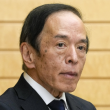
Just in | Bank of Japan Governor Ueda commits to effectively steering monetary policy to achieve a stable 2% inflation target. Ueda: Underlying Inflation Likely to Converge Toward 2% Target in Second Half of FY2026 Through FY2027
 From investingnews.com|Mar 16, 2026
Central banks are a key component of gold demand, and in recent years their gold purchases have become a major driver of the gold price's gains. Global central banks held more ...

-
- Newer Stories
 From zerohedge.com|Mar 16, 2026
The DOE’s Office of Critical Minerals and Energy Innovation (CMEI) released a Notice of Funding Opportunity for up to $500 million for advancing its strategy to develop secure ...
 From youtube.com/cnbctelevision|Mar 16, 2026|3 comments
Jeremy Siegel, professor emeritus of finance at University of Pennsylvania’s Wharton School of Business and WisdomTree chief economist, joins 'Squawk Box' to discuss the state of ...
 From rba.gov.au|Mar 16, 2026|17 comments
At its meeting today, the Board decided to increase the cash rate target by 25 basis points to 4.10 per cent. While inflation has fallen substantially since its peak in 2022, it picked up materially in the second half of 2025. Information since the February meeting suggests that some of the increase in inflation reflects greater capacity pressures. In addition, the conflict in the Middle East has resulted in sharply higher fuel prices, which, if sustained, will add to inflation. Short-term measures of inflation expectations have already risen. As a result, the Board judged that there is a material risk that inflation will remain above target for longer than previously anticipated. Higher capacity pressures reflect, in part, the greater momentum in demand in the latter part of 2025. Growth in private demand strengthened substantially more than was expected in mid-2025, although the composition of that growth surprised in the December quarter. Business investment was above expectations and consumption was below expectations. Meanwhile, growth in unit labour costs declined. More recently, the unemployment rate has been a little lower than expected and measures of labour underutilisation remain at low rates. Activity and prices in the housing market grew strongly over the past year, although housing price growth moderated somewhat at the start of 2026. Financial conditions have tightened a little this year, but the extent to which monetary policy is restrictive is uncertain. Credit is readily available to both households and businesses and the effects of interest rate reductions in 2025 are yet to flow through fully to aggregate demand, prices and wages. The exchange rate, money market interest rates and government bond yields have risen over the past month. In large part, higher interest rates reflect expectations for the path of monetary policy, which have risen in Australia and most other advanced economies in response to the expected inflationary implications of the conflict in the Middle East. There are material uncertainties about the outlook for domestic economic activity and inflation and the extent to which monetary policy is restrictive. Globally, the conflict in the Middle East poses substantial risks in both directions. A longer or more severe conflict could put further upward pressure on global energy prices; this will push up near-term inflation and could also increase inflation further out if it impairs supply capacity or price rises get built into longer term inflation expectations. Higher prices and prolonged uncertainty may cause growth to be lower in Australia’s major trading partners and also in Australia. Just in | RBA Reports Significant Decline in Inflation Since 2022 Peak, Yet Notable Increase Observed in Second Half of 2025. Just in | RBA Reports Slight Tightening of Financial Conditions, Uncertainty Remains Over Monetary Policy's Restrictiveness. Reserve Bank of Australia: The ongoing conflict in the Middle East has driven fuel prices sharply higher, which could further boost inflation if sustained. Reserve Bank of Australia: The Board concluded that inflation is likely to remain above target for some time, with risks increasingly tilted to the upside.
- Story Stats
- Mar 16, 2026 8:46pm Posted byFundamental Analysis1,448
