
-
Paulson: Harnessing the Benefits, Minding the Risks of Fintech Innovations

Thank you, Julapa. Good morning, everyone. It is my distinct pleasure to welcome you to the Federal Reserve Bank of Philadelphia and to our Ninth Annual Fintech Conference. As we begin the conference, I’d like to share my perspectives — and some of the questions that I am grappling with as we consider the conference theme: how to harness the benefits and mind the risks of fintech innovations. These are of course my own views, and not necessarily those of the Federal Reserve System or my Federal Open Market Committee (FOMC) colleagues. As I look around this room, I’m struck by the extraordinary depth and ... (full story)
Added at 9:01am


- Comments / Top
- Subscribe
-
Related Stories


RBA’S BRAD JONES: MARKETS STRUGGLING TO PRICE GEOPOLITICAL RISKS; GLOBAL MARKET PRICING APPEARS BENIGN RBA’S JONES: EARLY SIGNS OF FRAGMENTATION EMERGING IN CENTRAL BANK GOLD HOLDINGS ...

*BOSTIC: MOVING POLICY LOWER RISKS FEEDING 'INFLATION BEAST' *BOSTIC: LABOR MARKET SHIFTING BUT NOT CLEARLY WEAKENING *BOSTIC: PRICE STABILITY STILL CLEARER, URGENT RISK FACING FED  Weighing the Risks: Why Inflation Tips the Scales Thank you for inviting me to be with you. I especially enjoyed the short trip to the venue. At the Atlanta Fed, we are honored to serve as regular host to the Atlanta Economics Club monthly meetings. My staff and I appreciate the work you do to advance the understanding and practice of economics. Before I dive into my remarks, let me remind you that these thoughts are mine and do not necessarily reflect the views of my colleagues on the Federal Open Market Committee (FOMC) or at the Atlanta Fed. Today, I will detail my economic and monetary policy outlook through the lens of the objectives Congress assigned the Federal Reserve: price stability and sustainable maximum employment. Let me set the stage by sharing that I believe that risks to both of the mandated objectives make this the most challenging environment since I became a central banker in 2017. In this moment, we face the difficult circumstances of softening labor market conditions while inflation remains materially above the FOMC's stated 2 percent objective. The unwelcome implication is that reductions in interest rates that normally would mitigate risks to the employment mandate could heighten the risks to the price stability mandate. And vice versa: maintaining moderately restrictive monetary policy, the typical tool in battling inflation, raises the risks to the employment mandate. The job of an FOMC participant is to confront this tension and weigh the trade-offs inherent in determining the appropriate setting for monetary policy. Right now, it is an extremely close call. But I'm going to detail my case that, despite shifts in the labor market, the clearer and urgent risk is still price stability. Let me preface the meat of my talk by noting that we've missed some data releases because of the federal government shutdown. We are not flying blind, however, and I'll discuss some of the alternative information sources guiding my policy thinking right now. Fed's Bostic: I do not view a severe labor market downturn as the most likely near-term outcome.
Weighing the Risks: Why Inflation Tips the Scales Thank you for inviting me to be with you. I especially enjoyed the short trip to the venue. At the Atlanta Fed, we are honored to serve as regular host to the Atlanta Economics Club monthly meetings. My staff and I appreciate the work you do to advance the understanding and practice of economics. Before I dive into my remarks, let me remind you that these thoughts are mine and do not necessarily reflect the views of my colleagues on the Federal Open Market Committee (FOMC) or at the Atlanta Fed. Today, I will detail my economic and monetary policy outlook through the lens of the objectives Congress assigned the Federal Reserve: price stability and sustainable maximum employment. Let me set the stage by sharing that I believe that risks to both of the mandated objectives make this the most challenging environment since I became a central banker in 2017. In this moment, we face the difficult circumstances of softening labor market conditions while inflation remains materially above the FOMC's stated 2 percent objective. The unwelcome implication is that reductions in interest rates that normally would mitigate risks to the employment mandate could heighten the risks to the price stability mandate. And vice versa: maintaining moderately restrictive monetary policy, the typical tool in battling inflation, raises the risks to the employment mandate. The job of an FOMC participant is to confront this tension and weigh the trade-offs inherent in determining the appropriate setting for monetary policy. Right now, it is an extremely close call. But I'm going to detail my case that, despite shifts in the labor market, the clearer and urgent risk is still price stability. Let me preface the meat of my talk by noting that we've missed some data releases because of the federal government shutdown. We are not flying blind, however, and I'll discuss some of the alternative information sources guiding my policy thinking right now. Fed's Bostic: I do not view a severe labor market downturn as the most likely near-term outcome.
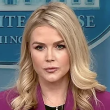
WH Press Sec. Leavitt: October CPI and jobs data likely never to be released. WH Press Sec. Leavitt: The Federal statistical system may have been permanently damaged.
